


When selecting the best wood for end grain cutting boards, teak and acacia remain top choices, valued for durability, moisture resistance, and stunning aesthetics. Teak cutting boards excel with natural oils that offer superior moisture resistance, making them ideal for high-use kitchens. Acacia cutting boards are an eco-friendly, affordable option with unique grain patterns, adding a natural charm to any kitchen decor. Both teak and acacia end grain cutting boards are also gentle on knives, helping to preserve blade sharpness while providing a smooth, durable surface for all cutting tasks. Investing in either ensures you have a reliable, beautiful, and long-lasting cutting board.
Why End Grain Boards Are Ideal for Cutting

End grain cutting boards, crafted with vertical wood grain, are among the best wood choices for cutting boards. This design allows the best wood for end grain cutting boards to absorb cuts and self-heal, keeping the surface smooth and extending the board’s life.
Whether you’re searching for the best wood for end grain cutting boards to withstand daily use or a board with a natural, artistic appeal, end grain designs are the ideal solution. Both teak and acacia wood are popular choices for the best wood for end grain cutting boards, providing the perfect balance of durability and knife-friendliness, with each wood offering distinct benefits for any kitchen.
Bear Chop: Craftsmanship Rooted in Nature
Bear Chop’s cutting boards are crafted with quality, sustainability, and the strength of nature in mind. Our founders, inspired by the resilience of ancient bears observed in the wild, designed Bear Chop boards to reflect strength, beauty, and environmental responsibility. With Bear Chop, each cutting board embodies the spirit of nature while providing a reliable, sustainable kitchen companion made from responsibly sourced wood. Our teak and acacia boards are FSC-certified, meaning they’re made from wood harvested in forests that meet the highest standards for environmental responsibility
For those seeking the best wood for end grain cutting boards, Bear Chop offers exceptional options in both teak and acacia. Our teak end grain cutting boards provide unmatched durability and moisture resistance, perfect for heavy kitchen use, while our acacia boards offer a beautiful and budget-friendly alternative without compromising on quality. All Bear Chop boards are FSC-certified, ensuring the wood is harvested from forests that meet the highest standards for environmental responsibility. With Bear Chop, you’re choosing not only the best wood for end grain cutting boards but also a sustainable and reliable kitchen companion.
Teak: The Durable, Moisture-Resistant Choice
Teak is widely considered one of the best woods for end grain cutting boards due to its durability, natural oil content, and superior moisture resistance. These qualities make it a top choice for high-activity kitchens, where regular exposure to moisture and heavy chopping is the norm. With a unique ability to resist warping and cracking, teak end grain boards can withstand frequent use without compromising on quality.
Benefits of Teak for End Grain Cutting Boards
- Natural Moisture Resistance: Thanks to its high natural oil content, teak repels water, minimizing the risk of warping or splitting, even with daily cleaning.
- Durability: Teak is a dense hardwood, capable of withstanding heavy use, making it an ideal choice for cooks who frequently rely on their cutting boards.
- Knife-Friendliness: Teak’s dense yet smooth surface is gentle on knives, preserving their sharpness and reducing wear.
- Minimal Maintenance: Due to its natural oils, teak requires less frequent oiling compared to other woods, making it a low-maintenance choice.
Pros and Cons of Teak Cutting Boards
Pros:
- Excellent moisture resistance, reducing warping and cracking.
- Highly durable, making it suitable for heavy kitchen use.Knife-friendly surface helps preserve blade sharpness.
- Requires less frequent oiling, thanks to natural oils in the wood.
Cons:
- Higher price point due to its premium quality and durability.
- Slightly heavier than acacia, which may impact portability.
Bear Chop’s Teak Options
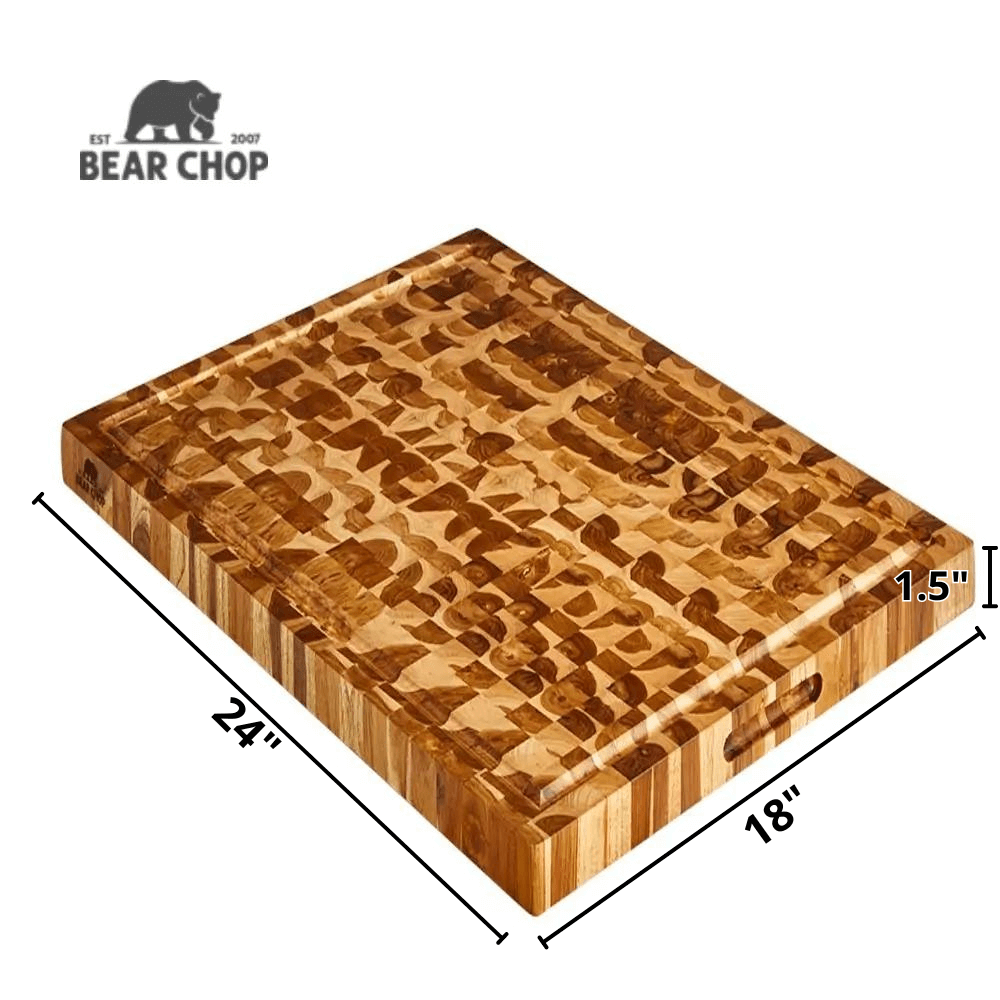
Bear Chop’s Extra Large End Grain Teak Cutting Board (24 x 18 x 1.5 inches) is a premium example of the best wood for end grain cutting boards, showcasing teak’s renowned quality and resilience. Crafted specifically for professional chefs and serious home cooks, this end grain teak cutting board offers a robust, water-resistant surface that is both gentle on knives and built to withstand heavy kitchen use. The high natural oil content in teak provides a rich, warm color, enhancing the board’s functionality, durability, and visual appeal. Investing in Bear Chop’s teak cutting boards means selecting the best wood for end grain cutting boards, bringing a durable, stylish, and long-lasting tool into your kitchen.
Acacia: Affordable, Eco-Friendly, and Beautiful
Acacia is another popular choice for end grain cutting boards. Known for its affordability, eco-friendly properties, and beautiful grain patterns, acacia provides a more budget-friendly alternative to teak without compromising on quality. As a hardwood, acacia is durable and has a high resistance to scratches, making it a great option for regular kitchen tasks. Its unique grain patterns and warm hues make it an attractive addition to any kitchen.
Benefits of Acacia for End Grain Cutting Boards
- Affordability: Acacia is generally more affordable than teak, providing a durable, beautiful wood choice without a high price tag.
- Sustainability: Acacia is a fast-growing, renewable resource, making it an eco-friendly choice for environmentally conscious consumers.
- Aesthetic Appeal: The rich, warm hues and varied grain patterns make each acacia board visually unique, adding natural beauty to the kitchen.
- Durability: While not as dense as teak, acacia is still a hardwood with a high resistance to wear, offering an excellent balance between durability and affordability.
Pros and Cons of Acacia Cutting Boards
Pros:
- More affordable than teak, making it accessible for all budgets.
- Eco-friendly, as acacia is a fast-growing, renewable wood.
- Unique grain patterns and warm tones add beauty to any kitchen.
- Provides a smooth, durable surface that’s gentle on knives.
Cons:
- Requires more frequent oiling than teak to maintain its color and durability.
- Less moisture-resistant than teak, so it benefits from regular maintenance.
Bear Chop’s Acacia Options

Bear Chop’s Large End Grain Acacia Cutting Board (20 x 15 x 1.25 inches) combines functionality with natural beauty, making it one of the best woods for end grain cutting boards, perfect for both everyday use and special occasions. The acacia wood’s warm tones and unique grain patterns make this end grain board a true centerpiece in any kitchen. With sustainably sourced materials and eco-friendly qualities, Bear Chop’s acacia cutting boards are an ideal choice for anyone seeking the best wood for end grain cutting boards that are both affordable and environmentally conscious. This acacia cutting board balances durability and style, bringing quality and sustainability into your kitchen.
Other Popular Woods for End Grain Cutting Boards
Other Popular Woods for End Grain Cutting Boards
While teak and acacia are among the best woods for end grain cutting boards, several other types also perform well in terms of durability, aesthetics, and knife-friendliness. Here’s a quick look at other popular options if you’re searching for the best wood for end grain cutting boards:
- Maple: Known as one of the best woods for end grain cutting boards, maple is valued for its hardness and fine grain. It resists scratches and bacteria, making it durable and hygienic for frequent kitchen use.
- Walnut: Walnut is a top choice for those who want the best wood for end grain cutting boards with a luxurious appearance. Its rich, dark color and smooth texture are gentle on knives, and it develops a beautiful patina over time.
- Cherry: Cherry wood offers warm, reddish hues that deepen as it ages, adding natural charm to the kitchen. As one of the best woods for end grain cutting boards, cherry combines durability with a knife-friendly surface for daily prep tasks.
- Beech: Beechwood is another excellent option for end grain cutting boards. Known for its fine, dense grain and light color, beech provides a hard, durable surface that resists warping and absorbs shock, making it ideal for cutting and chopping. Its affordable price and uniform texture also make it popular for home kitchens.
Each of these woods—maple, walnut, and cherry—offers unique benefits, making them excellent choices for anyone looking for the best wood for end grain cutting boards that complement different kitchen styles and needs.
Comparing Teak and Acacia for End Grain Cutting Boards
To help you decide which wood is the best for your end grain cutting board, here’s a side-by-side comparison of teak and acacia:

| Feature | Teak | Acacia |
| Durability | Extremely durable; considered one of the best woods for end grain cutting boards, withstands heavy kitchen use | Durable, but slightly softer than teak; still an excellent choice for a high-quality end grain cutting board |
| Moisture Resistance | High natural oil content provides excellent moisture resistance, perfect for wet environments | Moderate; requires regular oiling for best results |
| Knife-Friendliness | Gentle on knives, ideal for preserving blade sharpness, making it among the best wood for end grain cutting boards | Smooth and knife-friendly, great for daily kitchen tasks |
| Maintenance | Low maintenance; natural oils reduce the need for frequent care | Requires regular oiling to maintain shine and durability |
| Appearance | Rich, dark grain with a polished, smooth finish | Warm tones with unique, attractive grain patterns |
| Eco-Friendliness | FSC-certified options available, environmentally responsible | Highly sustainable and renewable, eco-friendly choice |
| Price | Premium quality; higher price point | More affordable, accessible to all budgets, best for eco-conscious buyers |
Choosing the Right End Grain Cutting Board: Key Factors to Consider
When selecting the best wood for end grain cutting boards, keep these simple factors in mind:
- Thickness: A thickness of 1 to 2 inches provides durability and stability. Thicker boards are sturdier and resist warping, especially with woods like teak and acacia.
- Size: Choose a size that fits your kitchen space and cutting needs. Larger boards (e.g., 18 x 24 inches) offer ample room for chopping, while smaller boards are easier to store.
- Weight: End grain boards made from dense woods like teak can be heavy. Consider whether you need a portable board or prefer a heavier, more stable option.
- Wood Type: Both teak and acacia are top choices for the best wood for end grain cutting boards. Teak offers excellent moisture resistance and durability, while acacia is affordable and eco-friendly, with stunning grain patterns.
- Maintenance Needs: Teak is lower maintenance due to its natural oils, requiring less frequent oiling. Acacia benefits from regular oiling to maintain its appearance and durability.
By considering thickness, size, weight, and maintenance, you can select a teak or acacia end grain cutting board that meets your kitchen needs and stands the test of time.
Why Choose Bear Chop for Teak and Acacia Cutting Boards
Bear Chop’s teak and acacia end grain cutting boards represent the best in durability, style, and sustainability. Our boards are crafted from eco-friendly, FSC-certified wood, ensuring that every product reflects a commitment to quality and environmental responsibility. Choosing a Bear Chop teak board means investing in a premium, moisture-resistant option ideal for heavy-duty kitchens. For those prioritizing affordability and unique beauty, our acacia cutting boards deliver durability and warmth at a competitive price, making them among the best woods for end grain cutting boards for any kitchen style.
Selecting Bear Chop means choosing the best wood for end grain cutting boards, bringing a sustainable, high-quality kitchen companion into your home that’s built to last.
How to Care for Teak and Acacia End Grain Cutting Boards
Both teak and acacia end grain cutting boards, made from the best wood for end grain cutting boards, need regular care to stay durable and beautiful. Here’s a quick care guide.
- Oiling: Regularly apply food-grade mineral oil to keep the wood hydrated. Due to its natural oils, teak requires oiling every few months, while acacia benefits from more frequent conditioning to retain its color and durability. Oiling protects your investment in the best wood for end grain cutting boards, enhancing longevity.
- Cleaning: Hand-wash your teak or acacia cutting board with mild soap and warm water after each use. Avoid soaking, as excess moisture can lead to warping. This gentle cleaning approach maintains the high quality of your best wood for end grain cutting board.
- Drying and Storage: After cleaning, dry thoroughly and store in a cool, dry place, away from sunlight. Proper storage preserves your teak or acacia end grain board and keeps it looking beautiful for years, showcasing why it’s among the best woods for end grain cutting boards.
FAQs
1. What is the best wood for an end grain cutting board?
The best wood for end grain cutting boards includes options like teak and acacia. Teak is known for its durability and moisture resistance, making it perfect for frequent use, while acacia offers a more affordable, eco-friendly option with stunning grain patterns. Both woods are excellent choices for maintaining knife sharpness and ensuring a long-lasting board.
2. How often should I oil my teak or acacia cutting board?
To maintain the best quality for your teak or acacia end grain cutting board, regular oiling is recommended. Teak generally requires oiling every 2-3 months due to its natural oils, while acacia benefits from monthly oiling to retain its color, durability, and smooth finish.
3. Is acacia as durable as teak for end grain boards?
While acacia is durable and resistant to scratches, teak is generally considered more durable for end grain cutting boards. Teak’s high natural oil content offers superior moisture resistance and strength, making it a top choice for the best wood for end grain cutting boards in professional and home kitchens alike.
4. Can end grain boards be used as serving trays?
Yes, end grain cutting boards made from woods like teak and acacia can double as serving trays. Their unique grain patterns and polished surfaces make them visually appealing for serving, while their durability ensures they hold up to regular use, making them among the best woods for multi-functional kitchen tools.
5. Are Bear Chop cutting boards sustainably sourced?
Yes, all Bear Chop cutting boards are made from responsibly sourced wood, including FSC-certified teak and acacia. This commitment to sustainability ensures Bear Chop offers some of the best wood for end grain cutting boards, combining quality, durability, and environmental responsibility.
Conclusion: Teak and Acacia – The Best Woods for End Grain Cutting Boards
Both teak and acacia are top choices for end grain cutting boards, each offering unique advantages. Teak, known for its exceptional durability and natural moisture resistance, is often regarded as the best wood for end grain cutting boards in high-use environments. This makes teak ideal for those who need a cutting board that can handle frequent use while preserving knife sharpness.
On the other hand, acacia provides an affordable, eco-friendly option with beautiful grain patterns. Acacia’s warm tones and unique texture make it a great addition to any kitchen, especially for home chefs seeking quality on a budget. Acacia is also highly sustainable, making it one of the best woods for end grain cutting boards for environmentally conscious consumers.
Choosing Bear Chop’s teak or acacia end grain boards means investing in a high-quality, sustainably sourced product that enhances both the functionality and aesthetic appeal of your kitchen. With these boards, you’re not just selecting the best wood for end grain cutting boards—you’re adding a durable, beautiful, and eco-friendly kitchen companion that’s built to last.