


When choosing the perfect cutting board, the debate often comes down to acacia vs teak cutting board. Both woods offer durability, aesthetics, and natural antimicrobial properties, but which one truly stands out for your kitchen? Whether you’re a home cook or a professional chef, selecting the right cutting board can impact knife longevity, maintenance, and overall food safety.
At Bear Chop, we specialize in premium acacia vs teak cutting boards, crafted to bring quality, sustainability, and long-lasting performance to your kitchen. But before we dive into the differences between these two wood types, let’s take a closer look at what makes Bear Chop cutting boards a legendary choice for culinary enthusiasts.

Bear Chop – The Legend of Quality Craftsmanship
When it comes to choosing between an acacia vs teak cutting board, durability, craftsmanship, and sustainability matter. At Bear Chop, we bring a legacy of premium woodworking to every cutting board, ensuring that each piece reflects strength, longevity, and expert craftsmanship. Whether you’re looking for an acacia cutting board known for its rich grain or a teak cutting board prized for its water resistance, Bear Chop offers kitchen essentials designed to last a lifetime.

The Origins of Bear Chop
The inspiration behind Bear Chop cutting boards comes from nature itself. Deep in the wilderness, ancient bears sharpened their claws on mighty trees, selecting only the strongest and most resilient wood. Witnessing this, our founders realized the importance of durability, quality, and natural selection—a philosophy that continues in our handcrafted acacia and teak cutting boards today.
By combining traditional craftsmanship with modern techniques, we create high-quality cutting boards that offer both style and functionality. Whether you’re using an acacia wood cutting board for its affordability and strength or a teak cutting board for its superior moisture resistance, Bear Chop ensures that your kitchen tool stands the test of time.
From Forest Floor to Kitchen Counter
Every Bear Chop acacia vs teak cutting board begins its journey in FSC-certified sustainable forests, where only the finest, most durable wood is selected. Our acacia cutting boards are crafted from responsibly harvested trees, ensuring eco-friendliness without compromising on quality. Meanwhile, our teak cutting boards feature naturally occurring oils that provide exceptional water resistance and longevity.
Once sourced, the wood undergoes an advanced drying and steaming process to enhance its durability and prevent warping. Each acacia vs teak cutting board is then meticulously sanded, polished, and treated with food-safe oil to maintain its pristine condition. The result? A Bear Chop cutting board that not only looks stunning but also offers unparalleled strength and performance in the kitchen.
Health-First & Eco-Friendly Design
When comparing an acacia vs teak cutting board, food safety is a crucial factor. Bear Chop cutting boards are designed with natural antimicrobial properties, making them a safer choice for food preparation. Unlike plastic boards that can harbor bacteria in deep knife grooves, our acacia and teak cutting boards offer a sanitary, eco-friendly, and knife-friendly surface.
Our teak cutting boards are naturally resistant to water and bacteria, while our acacia wood cutting boards provide a sustainable, durable, and budget-friendly alternative. With Bear Chop, you’re investing in a kitchen essential that prioritizes hygiene, sustainability, and performance.
The Ultimate Forever Cutting Board
A Bear Chop cutting board isn’t just another kitchen tool—it’s a lifetime investment. Whether you choose an acacia cutting board for its affordability or a teak cutting board for its premium durability, our boards are built to withstand daily chopping, slicing, and carving.
Our edge grain and end grain cutting boards are specially designed to minimize knife marks, providing a long-lasting surface that’s gentle on your blades. Unlike low-quality alternatives, a Bear Chop teak or acacia cutting board maintains its strength and elegance for years, making it a must-have in any kitchen.
For those searching for the perfect acacia vs teak cutting board, Bear Chop delivers handcrafted excellence, sustainability, and durability—because every great meal starts with the right cutting board.
Teak Cutting Board Pros and Cons
When comparing an acacia vs teak cutting board, many chefs and home cooks lean towards teak due to its durability, moisture resistance, and knife-friendly surface. Teak cutting boards are a premium choice for those who want a long-lasting and aesthetically appealing kitchen tool. At Bear Chop, we craft high-quality teak cutting boards designed to provide superior performance while maintaining their natural beauty. Let’s explore the pros and cons of teak cutting boards and why a Bear Chop teak cutting board is the best investment for your kitchen.

Pros of Teak Cutting Boards
- High Natural Oil Content Makes It Water-Resistant
- Durable and Long-Lasting
→ Bear Chop Large End Grain Teak Cutting Board (20 x 15 x 1.5 inch) – $99.99
✔ End grain construction for enhanced durability
✔ Less wear and tear on knives
✔ Perfect for chopping meats and vegetables
- Gentle on Knives, Reducing Blade Dullness
- Resistant to Mold and Bacteria Growth
Cons of Teak Cutting Boards
- More Expensive Than Acacia
- Heavier, Making It Less Portable
→ If you prefer a lighter cutting board, consider our Bear Chop Large Edge Grain Acacia Cutting Board (20 x 15 x 1.25 inch) – $44.99
- Requires Regular Maintenance with Mineral Oil
- Maintenance Tip:
✔ Apply food-grade mineral oil every 3-4 weeks
✔ Wipe the board dry immediately after washing
✔ Avoid prolonged soaking in water
Acacia Cutting Board Pros and Cons
When deciding between an acacia vs teak cutting board, many home cooks and professional chefs look for a balance between affordability, durability, and sustainability. Acacia cutting boards are a popular choice due to their beautiful grain, lightweight design, and budget-friendly price, making them an excellent alternative to teak cutting boards. At Bear Chop, we craft premium acacia cutting boards that deliver high-quality performance while being eco-friendly and long-lasting. Below, we’ll explore the pros and cons of acacia cutting boards and why a Bear Chop acacia cutting board is the ideal choice for your kitchen.

Pros of Acacia Cutting Boards
- Beautiful Grain Patterns
- Sustainable and Eco-Friendly Wood Choice
- Lightweight and Easy to Handle
→ Bear Chop Large Edge Grain Acacia Cutting Board (20 x 15 x 1.25 inch) – $44.99
✔ Easy to lift and store
✔ Perfect for everyday meal prep
✔ A great alternative to heavier teak cutting boards
Cons of Acacia Cutting Boards
- Requires Frequent Oiling to Maintain Water Resistance
- Maintenance Tip:
✔ Use food-grade mineral oil every 2-3 weeks
✔ Avoid soaking in water or leaving the board wet for extended periods
✔ Store in a dry place to prevent moisture damage
- Can Be Slightly Tougher on Knives Compared to Teak
- More Prone to Warping If Not Properly Cared For
- Prevent Warping By:
✔ Oiling the board regularly
✔ Avoiding dishwasher use – hand wash only
✔ Storing in an upright position to prevent moisture buildup
Comparing Acacia vs Teak Cutting Board
When choosing the best cutting board for your kitchen, the debate between acacia vs teak cutting board is one of the most common among chefs and home cooks. Both acacia cutting boards and teak cutting boards offer unique benefits, but their differences in aesthetics, durability, maintenance, knife-friendliness, water resistance, and price make each suitable for different needs. Below, we’ll break down the key factors that set acacia vs teak cutting boards apart and help you decide which is the best investment for your kitchen.
Aesthetics – Visual Appeal and Grain Pattern Differences
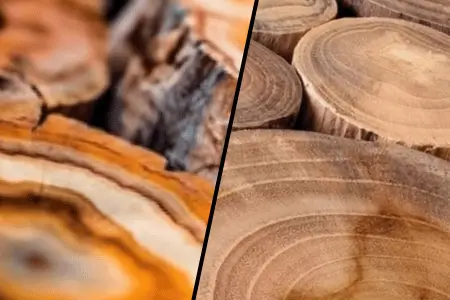
When comparing acacia vs teak cutting boards, one of the first noticeable differences is appearance. Acacia cutting boards feature a bold, high-contrast grain pattern, offering a rustic and modern look that stands out in any kitchen. Meanwhile, teak cutting boards have a smooth, uniform grain with a warm golden-brown hue, providing a more refined and sophisticated aesthetic.
Aesthetic Comparison:
✔ Acacia Wood Cutting Board – Rich, deep grain patterns with striking color variation
✔ Teak Wood Cutting Board – Subtle, elegant, and uniform golden-brown tone
Durability – Which Wood Type Lasts Longer Under Frequent Use?
One of the key differences in acacia vs teak cutting boards is durability. Teak cutting boards are well known for their superior strength and resistance to deep knife marks, thanks to their high natural oil content and tight grain structure. This makes teak cutting boards a long-term investment, as they last years without excessive wear.
Acacia cutting boards, while still durable, tend to dry out faster if not properly maintained, leading to potential cracking or splitting over time. However, acacia wood cutting boards are still a strong and affordable alternative when properly oiled.
Durability Comparison:
✔ Teak Cutting Board – Highly resistant to knife damage, cracking, and moisture
✔ Acacia Cutting Board – Tough, but requires regular maintenance to prevent wear
Acacia vs Teak Cutting Board Maintenance – Cleaning, Oiling, and Long-Term Care
Proper cutting board maintenance is essential for longevity and food safety. Teak cutting boards have a natural advantage due to their high oil content, requiring less frequent oiling and making them lower maintenance.
Acacia cutting boards, on the other hand, are more porous and prone to absorbing moisture, requiring regular oiling every 2-3 weeks to prevent warping and cracks. Regardless of the wood type, all Bear Chop cutting boards should be hand-washed with mild soap and never soaked in water.

Maintenance Comparison:
✔ Teak Cutting Board – Requires oiling once a month
✔ Acacia Cutting Board – Requires oiling every 2-3 weeks
Maintenance Tips for Both Woods:
✔ Wipe dry immediately after washing
✔ Use food-grade mineral oil for conditioning
✔ Store in an upright position to avoid moisture damage
Ease on Knives – Which is Gentler on Your Blades?
Another important factor in acacia vs teak cutting boards is how they affect knife sharpness. Teak cutting boards are softer and more knife-friendly, thanks to their natural oil content that reduces blade friction. This helps preserve knife edges for longer, making teak a top choice for professional chefs.
While acacia cutting boards are still gentle on knives, they are slightly harder, which may dull blades faster over time. Opting for an end grain acacia cutting board can help mitigate this issue.
Knife-Friendliness Comparison:
✔ Teak Cutting Board – Softer grain, preserves knife edges better
✔ Acacia Cutting Board – Harder surface, may cause faster dulling
Water Resistance – How Well Does Each Board Handle Moisture Exposure?
One of the biggest advantages of teak cutting boards is their exceptional water resistance. Thanks to teak’s high natural oil content, it repels moisture better than most hardwoods, making it less likely to warp, crack, or develop mold.
Acacia cutting boards, while still durable, absorb more water if not properly oiled, increasing the risk of warping and bacterial growth. Regular oiling and proper storage can help prevent moisture damage.
Water Resistance Comparison:
✔ Teak Cutting Board – Superior moisture resistance with minimal maintenance
✔ Acacia Cutting Board – More prone to moisture absorption, needs frequent oiling
Acacia vs Teak Cutting Board Price – Cost Comparison and Long-Term Investment Value
If you’re comparing acacia vs teak cutting boards based on price, acacia wood cutting boards are the more affordable option due to their faster growth and higher availability. However, teak cutting boards, while more expensive, are a long-term investment due to their durability and low maintenance.
Price Comparison:
✔ Acacia Cutting Board – More affordable, but requires frequent care
✔ Teak Cutting Board – More expensive, but lasts longer with minimal upkeep
Final Verdict: Which Cutting Board Should You Choose?
- Choose an Acacia Cutting Board If you want an affordable, stylish, and eco-friendly board but are okay with frequent maintenance.
- Choose a Teak Cutting Board If you prefer a low-maintenance, ultra-durable, and knife-friendly board that will last for years.
Bear Chop cutting boards offer premium craftsmanship and sustainable materials to ensure the best performance in your kitchen. Upgrade your cutting board today!
Why Choose Bear Chop Cutting Boards?
When selecting the best cutting board, the debate between acacia vs teak cutting board is a common one. Both acacia cutting boards and teak cutting boards have their advantages, but at Bear Chop, we take both materials to the next level by crafting premium wood cutting boards designed for durability, knife-friendliness, and long-term performance.
Whether you’re looking for an affordable acacia cutting board or a high-end teak cutting board, our collection offers top-quality kitchen essentials that combine aesthetics, sustainability, and functionality. Let’s explore why Bear Chop cutting boards are the perfect choice for your kitchen.
Premium Acacia and Teak Cutting Boards for Every Kitchen
At Bear Chop, we specialize in handcrafted acacia and teak cutting boards, offering unparalleled durability and craftsmanship. Whether you’re a home cook or a professional chef, choosing a Bear Chop cutting board means investing in a high-quality, long-lasting kitchen tool.
Why Choose a Bear Chop Acacia Cutting Board?
✔ Budget-friendly yet highly durable – a great alternative to expensive hardwoods
✔ Rich, natural grain patterns – makes a beautiful addition to any kitchen
✔ Eco-friendly and sustainably sourced – acacia is a fast-growing, renewable resource
✔ Lightweight and easy to handle – perfect for everyday chopping and meal prep
✔ Available in edge grain and end grain styles – providing different levels of durability and knife-friendliness
Why Choose a Bear Chop Teak Cutting Board?
✔ Superior durability and longevity – teak cutting boards are among the longest-lasting in the market
✔ Naturally high oil content – provides exceptional water resistance
✔ Knife-friendly surface – softer wood grain preserves blade sharpness
✔ Low maintenance – requires less frequent oiling compared to other woods
✔ Perfect for heavy-duty chopping – withstands daily kitchen use without warping or cracking
If you’re debating between an acacia vs teak cutting board, Bear Chop provides the best of both worlds, ensuring you get a high-quality, sustainable, and durable cutting board tailored to your needs.
Our Top Selling Acacia and Teak Cutting Boards
Bear Chop are available in both acacia vs teak cutting boards, each designed to provide maximum performance, durability, and elegance. Here are some of our best-selling cutting boards that have earned top ratings among home cooks and professional chefs alike.
Best Acacia Cutting Boards – Durable, Stylish & Affordable
- Acacia Wood Cutting Board with Handle (17 x 13 x 0.75 inch) – $34.99
- Extra Large Edge Grain Acacia Cutting Board (24 x 18 x 1.25 inch) – $54.99
- Large End Grain Acacia Cutting Board (20 x 15 x 1.25 inch) – $99.99
Best Teak Cutting Boards – Premium, Long-Lasting & Low Maintenance
If you’re debating Acacia vs Teak Cutting Board, Bear Chop offers the best of both—affordable, eco-friendly acacia cutting boards and durable, low-maintenance teak cutting boards. Whether you need knife-friendliness, water resistance, or long-term durability, our premium cutting boards are crafted to last.
→ Upgrade to a Bear Chop Acacia vs Teak Cutting Board today!
FAQs
Is teak or acacia better for a cutting board?
Teak is more durable and moisture-resistant, while acacia is more affordable and eco-friendly.
Is teak wood better than acacia?
Teak offers superior durability and water resistance, but acacia provides great value and sustainability.
Which wood is better for a cutting board?
Teak is better for longevity and knife-friendliness, while acacia is a budget-friendly, stylish option.
Why are acacia cutting boards so cheap?
Acacia is a fast-growing, sustainable wood, making it more abundant and cost-effective than teak.
Conclusion: Acacia vs Teak Cutting Board – Which One is Right for You?
When comparing Acacia vs Teak Cutting Board, the best choice depends on your kitchen needs, durability expectations, and budget.
- Choose a Teak Cutting Board if you want superior durability, water resistance, and a knife-friendly surface with low maintenance. Teak cutting boards are long-lasting, require less frequent oiling, and are ideal for serious home cooks and professional chefs.
- Choose an Acacia Cutting Board if you prefer an affordable, eco-friendly, and visually appealing cutting board. Acacia cutting boards offer great durability at a lower price, making them a budget-friendly alternative to teak.
At Bear Chop, we specialize in Acacia vs Teak Cutting Board options, ensuring you get the highest quality craftsmanship, sustainability, and longevity. Whether you’re looking for a knife-friendly teak cutting board or a cost-effective acacia cutting board, our premium selection delivers performance and style.
Upgrade to a Bear Chop Acacia vs Teak Cutting Board today and experience the ultimate in premium wood cutting boards.