


When deciding between an Edge Grain vs End Grain cutting board, remember this: Edge Grain boards have wood strips aligned parallel, offering a durable and knife-friendly surface. On the other hand, End Grain boards, with vertical wood strips, excel in durability and are gentle on knives thanks to their self-healing properties.
If you’re looking for a cutting board that can withstand heavy use and maintain knife sharpness, consider an End Grain board. However, if you prioritize affordability and versatility, an Edge Grain board might be the right choice for your kitchen.

Key Takeaways
- End grain boards are more durable and knife-friendly.
- Edge grain boards are visually appealing and stable.
- End grain boards have superior antimicrobial properties.
- Edge grain boards are more affordable.
- Professional cooks benefit from end grain boards’ durability.
What is Edge Grain Cutting Board?
An edge grain cutting board is typically constructed with the wood’s grain running parallel to the board’s surface, making it more durable and resistant to warping. These boards are popular for their sturdiness and ability to withstand heavy chopping and cutting.
Common materials used for edge grain boards include maple, cherry, walnut, and bamboo.
Definition and construction
Crafted from long strips of wood aligned parallel to one another, an edge grain cutting board is constructed by gluing these strips together to form a durable and visually appealing surface for food preparation. Unlike end grain cutting boards, where the wood fibers are exposed at the cutting surface, edge grain boards showcase the long rails of wood.
The construction of an edge grain cutting board involves placing the wood strips side by side, creating a smooth surface that highlights the natural patterns and colors of the wood grain.
Edge grain cutting boards are known for their sturdiness and resistance to warping, making them a popular choice for everyday use in the kitchen. By aligning the wood fibers parallel to the cutting surface, these boards provide a durable cutting surface that’s gentle on knives.
The construction of edge grain boards results in a visually appealing pattern that adds a touch of elegance to any kitchen countertop.
Benefits of edge grain boards
When considering cutting boards for your kitchen, edge grain boards stand out as a durable and visually appealing option. Unlike end grain cutting boards, which are constructed by fusing together the cut ends of wood, edge grain boards are made by placing the long edges of wood pieces side by side. This construction style makes edge grain boards more affordable while still offering many benefits.
One significant advantage of edge grain boards is their knife-friendly surface. The orientation of the wood fibers in edge grain boards allows knives to glide over the surface without causing significant damage to the blades. This results in less wear and tear on your knives, making edge grain boards a practical choice for everyday use.
Additionally, edge grain boards are known for their durability and stability. The long, continuous wood fibers in edge grain boards provide strength and resistance to warping or cracking, ensuring a long lifespan for your cutting board.
Moreover, the visual appeal of edge grain boards, with their clean lines and elegant patterns, can enhance the aesthetics of your kitchen while serving a functional purpose.
Common materials used for edge grain
Edge grain cutting boards are typically crafted from a variety of hardwoods, such as maple, walnut, and cherry. These wood types are popular choices due to their durability and resilience, making them ideal for edge-grain boards. When selecting materials for an edge grain butcher block, it’s essential to consider the quality and hardness of the wood. You can often find suitable lumber at a local lumber yard, where they may offer edge grain blocks ready for purchase.
Maple is a favored option for edge grain cutting boards because of its sturdy nature and light color, which complements various kitchen aesthetics.
Walnut provides a rich, dark finish and is known for its strength, making it a reliable choice for cutting boards that withstand heavy use.
Cherry offers a beautiful reddish hue and is valued for its natural antibacterial properties, adding an extra layer of hygiene to your kitchen tools.
Experimenting with different wood types can help you find the perfect edge-grain board that suits your needs and style.
What is End Grain Cutting Board?
End grain cutting boards are known for their durability and resistance to knife marks, making them a popular choice among chefs and cooking enthusiasts.
Common materials used for end grain boards include hardwoods like maple, cherry, and walnut.
Understanding the benefits and materials of end grain cutting boards can help you make an informed decision when selecting the best cutting board for your kitchen needs.
Benefits of end grain boards
To fully appreciate the craftsmanship and durability of a cutting board, one must consider the intricacies of an end grain design. End-grain boards are highly sought after for several reasons:
- Knife-Friendly: End grain boards are gentle on your knives as the wood fibers part when the knife blade comes into contact, leading to less dulling.
- Self-Healing Properties: The unique construction of end grain boards allows them to absorb the knife marks, making them less visible as the board is used.
- Durability: Due to the orientation of the wood fibers in end grain boards, they’re more resistant to warping and less prone to developing cut marks over time.
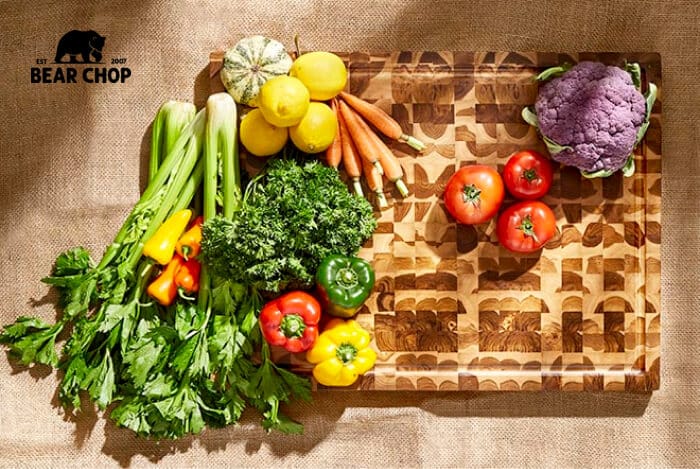
- Attractive Aesthetic: The beautiful checkerboard pattern created by the ends of the wood pieces in an end grain board adds a touch of elegance to your kitchen.
When comparing end grain vs edge grain cutting boards, the benefits of end grain boards clearly make them a popular choice among chefs and home cooks alike.

Common materials used for end grain
When considering the materials used for crafting end grain cutting boards, the selection plays a pivotal role in determining the board’s quality and performance. End-grain cutting boards are typically constructed using wood strips that are arranged in a vertical orientation. This arrangement creates a surface where the wood’s end grain is facing up, offering a more durable and knife-friendly cutting surface compared to edge grain boards.
The most common material used for end-grain cutting boards is hardwood, such as maple, cherry, walnut, or oak. These hardwoods are preferred due to their durability and resistance to knife marks. The wood strips are glued together using a high-quality food-safe adhesive to create a sturdy and long-lasting board.
Different types of end-grain cutting boards can be crafted using various combinations of wood species, allowing for unique designs and patterns. Some boards may feature contrasting wood colors, while others may incorporate exotic woods for a more decorative look. Ultimately, the choice of materials used in an end-grain cutting board significantly impacts its overall quality and performance.
Durability of Edge Grain Vs End Grain Cutting Board Comparison
Let’s talk about the durability differences between edge grain and end grain cutting boards.
The edge grain boards are known for their sturdy build and resistance to wear over time.
On the other hand, end grain boards are praised for their exceptional durability and longevity due to the way the wood fibers are positioned.
Edge grain durability and wear
Comparing the durability and wear of edge grain cutting boards to end grain counterparts reveals distinct differences in how these boards stand up to daily use. Edge grain boards, with their long wood fibers running parallel to the surface, offer durability and resistance to wear. Here are some key points to consider:
- Knife Edges: Edge grain cutting boards are gentler on knife edges compared to end grain boards, as the blade encounters the wood fibers straight on, reducing wear and tear on the knife.
- Grain Cutting Boards: Edge grain boards are generally more affordable than end grain boards, making them a budget-friendly option for those looking for durability.
- Edge Grain: The edge grain construction of these boards provides a stable surface that can withstand heavy daily use without showing signs of wear easily.
- Visible Knife Marks: While edge grain boards may show visible knife marks over time, these can add character to the board and don’t affect its functionality or durability significantly.
End grain durability and longevity
For end grain cutting boards, durability and longevity are key factors that set them apart from their edge grain counterparts. End grain cutting boards are renowned for their exceptional durability due to the way the wood fibers are oriented.
The structure of end grain boards, where the wood fibers are vertical to the cutting surface, allows the knife to slide between the fibers rather than cutting through them. This unique construction not only preserves the sharpness of your knives but also helps the board self-heal, closing up the cut marks, which in turn extends the board’s longevity.
The durability of end grain cutting boards makes them a long-lasting kitchen essential that can withstand heavy daily use without showing signs of wear as quickly as edge grain boards might. Investing in an end grain cutting board ensures that you have a reliable and durable kitchen companion that will serve you well for years to come.
Knife-Friendliness
When it comes to knife-friendliness, the type of cutting board you choose can significantly impact your blades.
Edge grain cutting boards can be harsh on knife edges over time, leading to quicker dulling.
On the other hand, end grain cutting boards are more forgiving and gentle on knife blades, helping them retain sharpness for longer periods.
How edge grain affects knife edges
To understand how edge grain affects knife edges, it’s essential to consider the structure of the wood fibers. Edge grains have a significant impact on the longevity and sharpness of your knife blade. Here’s why:
- Reduced Knife Marks: Edge grain butcher block cutting boards are less prone to showing knife marks compared to end grain boards, providing a smoother cutting surface for your knives.
- Less Abrasive: The orientation of the wood fibers in edge grain boards is gentler on knife blades, reducing wear and tear over time.
- Ease of Maintenance: Edge grain cutting boards are easier to maintain and require less frequent sharpening of knives due to their friendlier impact on blade edges.
- Longevity of Knife Sharpness: By choosing an edge grain cutting board, you can help preserve the sharpness of your knives for longer periods compared to using other types of boards.
Choosing an edge grain cutting board can be a knife-friendly decision, ensuring your knives stay sharper for longer while enjoying a smoother cutting experience.
How end grain protects knife blades
Position your knife on an end grain cutting board, and you’ll notice an immediate difference in how the wood fibers interact with the blade. Unlike edge grain boards, where the blade cuts through the long fibers, end grain boards feature fibers that are vertical to the cutting surface.
This vertical orientation allows the blade to slide between the fibers, leading to less wear and tear on the knife’s edge. The end grain acts as a protective barrier for knife blades, absorbing the impact of each cut and helping maintain the sharpness of the blade over time.
This protection is crucial for blade durability, as it minimizes the contact between the sharp edge of the knife and the hard surface of the cutting board. By using an end grain cutting board, you not only ensure the longevity of your knives but also experience smoother and more precise cuts without compromising on blade sharpness.
Maintenance Considerations
When it comes to maintaining your cutting board, knowing the care tips for both edge grain and end grain boards is essential. Proper refurbishing and oiling techniques can help prolong the lifespan of your board and keep it in top condition. Understanding these maintenance considerations will ensure your cutting board remains a reliable kitchen companion for years to come.
Care tips for edge grain boards
How do you ensure your edge grain cutting board maintains its quality and longevity? Proper care tips for edge grain boards are essential to preserve their durability and appearance. Follow these guidelines to keep your cutting board in top condition:
- Regular Oil Treatments: Apply food-grade mineral oil to your board every few weeks to prevent it from drying out and cracking. This helps maintain the wood’s moisture content and protects it from ambient moisture.
- Avoid Excessive Moisture: Limit exposure to excessive moisture, as it can cause the wood to swell and the glue lines to weaken over time. Always dry your board thoroughly after cleaning.
- Use Cutting Board Oil: Periodically, use cutting board oil specifically designed for wooden boards to enhance its resistance to stains and odors. This will also help maintain the wood’s natural luster.
- Avoid Harsh Cleaners: Refrain from using harsh cleaning agents or placing your board in the dishwasher, as this can damage the wood and compromise its quality. Stick to mild soap and warm water for cleaning.
Care tips for end grain boards
To ensure your end grain cutting board maintains its quality and longevity, proper care tips are crucial. End grain boards are unique in their construction, with the wood fibers facing upwards, making them more durable and resistant to cuts.
To care for your end grain cutting board, it’s essential to keep its moisture content stable. Avoid exposing it to extreme temperature changes or direct sunlight, as these can cause the wood to warp or crack.
After each use, wash the board with mild soap and warm water, ensuring it’s dried thoroughly to prevent moisture retention. Regularly oiling your end grain board with food-safe mineral oil or board cream helps maintain its luster and prevents it from drying out.
Store the cutting board in a cool, dry place, standing it on its side to allow for proper air circulation. By following these care tips, you can ensure that your end grain cutting board remains in optimal condition for years to come.
Refurbishing and oiling techniques
For maintaining the quality and longevity of your end grain cutting board, refurbishing and oiling techniques play a crucial role. When it comes to butcher blocks and wooden cutting boards, proper care ensures they remain functional and beautiful for years to come. Here are some essential refurbishing and oiling techniques for your end grain board:
- Sand the Surface: Begin by sanding the board lightly to remove any scratches or stains, ensuring a smooth surface for oiling.
- Apply Mineral Oil: Use food-grade mineral oil to coat the entire board, allowing it to penetrate the wood and prevent drying or cracking.
- Let it Rest: After oiling, allow the board to rest for a few hours or overnight to let the oil fully absorb into the wood.
- Repeat Regularly: To maintain optimal condition, refurbish and oil your end grain board every few months or as needed based on usage.
Antimicrobial Properties of Wood
Wood possesses natural antimicrobial properties that can help inhibit the growth of bacteria on cutting boards. Understanding how different wood grains, such as edge and end grain, affect this antimicrobial effectiveness is crucial for maintaining a hygienic kitchen environment. By comparing these properties, you can make an informed decision on which type of cutting board is best suited for your needs.
Understanding wood’s natural properties
Understanding the natural properties of wood, particularly its antimicrobial qualities, is essential when considering the benefits of using wooden cutting boards. Wood possesses inherent characteristics that make it a popular choice for kitchen tools due to its ability to inhibit the growth of bacteria. Here’s why wood’s antimicrobial properties make it a great material for cutting boards:
- Natural Defense: Wood contains antimicrobial compounds that can help reduce the growth of bacteria on its surface.
- Self-healing: Wood has the ability to heal itself to a certain extent, closing up small cuts and scratches that may harbor bacteria.
- Absorption: Wood has a porous nature that allows it to absorb excess moisture, preventing bacterial growth.
- Longevity: Wooden cutting boards tend to last longer than other materials like plastic, maintaining their antimicrobial properties over time.
Comparison of antimicrobial effectiveness between edge and end grain
Wooden cutting boards come in different grain orientations, namely edge grain and end grain. When it comes to antimicrobial effectiveness, there’s a notable difference between these two types.
Research has shown that end grain cutting boards, with their vertical orientation of wood fibers, possess superior antimicrobial properties compared to edge grain boards. The reason behind this variance lies in the construction of the boards. End grain boards have a higher capacity to absorb liquid, which helps to drown bacteria and prevent them from multiplying. Additionally, the presence of natural wood compounds in end grain boards contributes to their antimicrobial effectiveness.
On the other hand, edge grain boards, with their horizontal alignment of wood fibers, are less effective in combating microbial growth. Therefore, if you prioritize a cutting board that can naturally inhibit the growth of bacteria, opting for an end grain board would be the preferable choice.
Cost Considerations
When comparing edge grain and end grain cutting boards, it’s important to consider the cost. Edge grain boards typically fall within a lower price range due to their simpler construction, making them a budget-friendly option.
On the other hand, end grain boards are usually priced higher because of the additional labor involved in their production and their reputation for durability.
Price ranges for edge grain boards
For those considering investing in an edge grain cutting board, it’s essential to understand the price ranges that are typically associated with these durable and functional kitchen tools.
Here are some key points to consider when looking at the price ranges for edge grain boards:
- Affordable Options: Edge grain boards come in various price ranges, with some entry-level options available at around $30 to $50, making them a cost-effective choice for those on a budget.
- Mid-Range Prices: For higher quality and larger board sizes, expect to pay between $50 to $150. These boards are often crafted by reputable cutting board makers and offer a good balance between price and durability.
- Premium Selection: Premium edge grain boards can cost anywhere from $150 to $300 or more. These boards are usually larger in size, made with high-quality wood, and are crafted to last a lifetime.
- Customized and Luxury Boards: For those seeking truly unique or luxury options, custom-made edge grain boards can exceed $300, especially if made from exotic woods or by well-known artisans in the industry.
Price ranges for end grain boards
Considering the price ranges for end grain cutting boards can provide valuable insights into the cost considerations when comparing them to edge grain boards. End grain boards, made by arranging hardwoods like maple, cherry, or walnut with the grain facing upwards, are typically pricier than edge grain boards due to their construction method.
Price ranges for end grain cutting boards can vary based on factors such as the type of hardwood used, the board’s size, and the craftsmanship involved. A high-quality end grain cutting board crafted from premium hardwoods can range from $100 to $300 or more, depending on the brand and design intricacy.
While this may seem steep compared to edge grain boards, the durability and knife-friendliness of end grain boards make them a worthwhile long-term investment for serious cooks or kitchen enthusiasts. When comparing price ranges for cutting boards, it’s essential to weigh the upfront cost against the board’s longevity and performance to make an informed decision that aligns with your cooking needs and budget.
Which Cutting Board Should You Choose?
When deciding on a cutting board, it’s crucial to align your choice with your cooking habits. Consider whether you’re a professional chef or a home cook, as this can impact which board suits your needs best. Understanding these factors will help you choose between an edge grain or end grain cutting board that enhances your culinary experience.
Aligning your cutting board choice with cooking habits
If you’re wondering which cutting board to choose, it’s essential to align your decision with your cooking habits. Consider the following to ensure your cutting board suits your needs:
- Cooking Habits: Think about how often you cook and the types of ingredients you typically use. If you cook frequently and work with a variety of foods, a durable board like an edge-grain board might be more suitable.
- Edge-Grain Board: If you prefer a cutting board made from long wood pieces with a traditional grain pattern, an edge-grain board is an excellent choice. It offers a balance between durability and price.
- End Grain Board: For those who engage in heavy chopping and cutting tasks or have a preference for a board that’s forgiving on knife edges, an end grain board, with its self-healing properties, would be ideal.
- Wood Pieces: Consider the aesthetics you prefer. Edge-grain boards showcase long wood pieces, while end grain boards display a checkerboard pattern of wood pieces.
Considerations for professional vs home cooks
Professional and home cooks have distinct needs when selecting the right cutting board for their culinary tasks. For professional cooks who spend long hours in the kitchen, durability and longevity are crucial factors. In this case, an end grain cutting board made from hardwood like maple or walnut would be ideal. The end grain construction is more forgiving on knife edges, making it suitable for heavy daily use. Additionally, the self-healing properties of end grain boards help maintain their pristine surface, even with frequent chopping.
On the other hand, home cooks may prioritize versatility and affordability. An edge grain cutting board, crafted from materials like bamboo or oak, offers a balance between durability and cost-effectiveness. While edge grain boards may show more knife marks over time compared to end grain boards, they’re still durable enough for regular home use.
Ultimately, the choice between end grain and edge grain cutting boards boils down to the specific needs and preferences of the cook, whether they’re a professional chef working in a bustling kitchen or an amateur chef whipping up meals at home.
Frequently Asked Questions
How Does the Weight of Edge Grain Cutting Boards Compare to End Grain Cutting Boards?
When comparing the weight of cutting boards, edge grain ones are generally lighter than end grain boards. This lighter weight can make edge grain boards easier to handle and move around in the kitchen.
Are There Specific Wood Species Recommended for Each Type of Cutting Board?
For specific wood species recommended for each type of cutting board, consider maple for durability and versatility in edge grain boards, and walnut for its hardness and self-healing properties in end grain boards.
Can Edge Grain Cutting Boards Be Resurfaced Like End Grain Cutting Boards?
Yes, you can resurface edge grain cutting boards like end grain cutting boards. Sanding helps remove scratches and blemishes. Afterwards, apply a food-safe finish. Regular maintenance ensures longevity. Keep your cutting board in top shape!
Do Edge Grain Cutting Boards Require More Frequent Oiling Than End Grain Cutting Boards?
You should oil edge grain cutting boards more often than end grain ones. The surface is more exposed, needing extra care. Regular oiling keeps it hydrated and protected, ensuring longevity. Remember this to maintain your cutting board well.
Are There Any Design Differences Between Edge Grain and End Grain Cutting Boards?
Design differences exist between edge grain and end grain cutting boards. Consider aesthetics, durability, and knife-friendliness when choosing. Edge grain boasts a uniform surface and is easier to manufacture, while end grain offers better durability and knife edge retention.
When choosing between an edge grain and end grain cutting board, consider factors like durability, knife-friendliness, maintenance, antimicrobial properties, and cost. Ultimately, the decision comes down to personal preference and how you plan to use the cutting board. Both types have their own advantages and drawbacks, so choose the one that best fits your needs and style of cooking.